

%203fs.png)


Understanding the initial costs involved in a software development project is crucial. However, it's equally important to balance these initial expenses against the lifetime cost of the software. Making short-term savings can sometimes lead to higher long-term costs and vice versa.
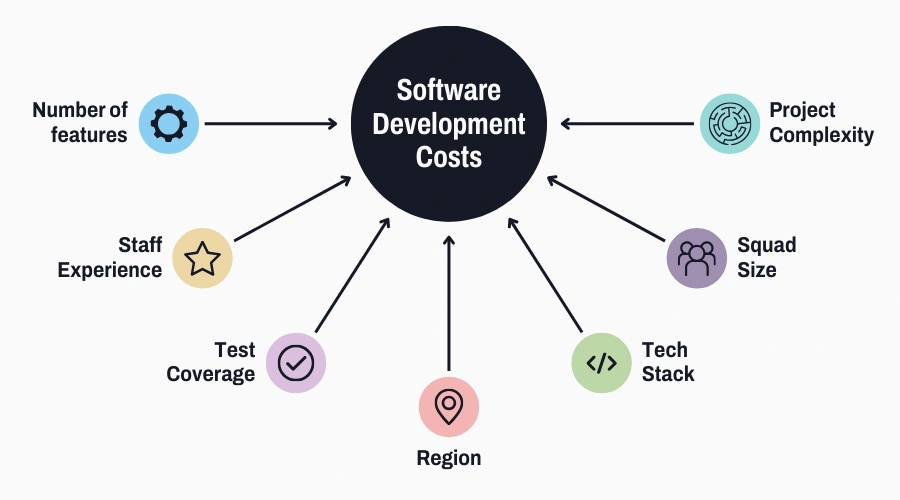
Development costs are just one component of initial costs. Here's how to calculate the true cost of software development.
Development fees are the most apparent component of the initial cost of software development. These fees cover the labor costs of a development team, designers, project managers, and other technical staff. The complexity and scope of the project heavily influence these development expenses, with custom solutions typically demanding higher fees.
Software development often involves acquiring licenses for development tools, frameworks, libraries, external systems and third-party services. These can range from integrated development environments (IDEs) to specific API access that enhances the software's functionality or enables connection with existing software.
Depending on the project, significant hardware costs may apply. This includes servers, computers, testing devices, and other infrastructure necessary to develop, test, and deploy the software. In some cases, specialized hardware may be needed to meet the project's requirements.
Initial setup costs encompass a variety of activities necessary to get the project off the ground. This includes setting up development environments, configuring servers, establishing version control systems, and integrating necessary tools and services.
Planning and analysis play a pivotal role in the initial software costs. This includes requirements gathering, feasibility studies, market research, and project management and planning. Understanding project needs, assessing viability, and organizing resources are fundamental for success.
Designing the software encompasses system architecture design, user interface (UI) and user experience (UX) design, and prototyping. These activities ensure the software's structure, visual elements, and user experience meet the project's objectives and user needs.
Testing is essential to ensure software quality and functionality. This includes unit testing, integration testing, system testing, and user acceptance testing (UAT). Each phase aims to validate different aspects of the software against specified requirements.
Documentation and training are vital for successful software deployment and use. This involves creating user manuals, technical documentation, and providing training for employees or dedicated team to familiarize them with the software's functionalities.
Outsourcing development work to countries with lower labor costs can significantly reduce initial expenses. However, if not managed carefully, this can lead to communication challenges, time zone differences, and potential quality issues.
Leveraging open-source software can eliminate licensing fees and reduce initial setup costs. While this can be beneficial, it may introduce security vulnerabilities and require more in-house maintenance and customization.
Reducing the scope or thoroughness of testing is a common way to cut initial costs. While this might save money initially, it can lead to significant issues post-launch, such as bugs and security vulnerabilities, which are often more expensive to fix and can damage the product’s reputation.
Employing less experienced developers can reduce salary expenses. However, this can lead to lower-quality code, increased development time, and potential issues with scalability and maintenance. The long-term cost of rectifying these issues often outweighs the initial savings.
Artificial Intelligence (AI) can streamline various aspects of software development, such as code generation, testing, and bug detection. By automating repetitive tasks, AI can significantly cut down on development time and costs. However, over-reliance on AI may result in a lack of human oversight, potentially leading to errors or gaps in functionality that could be costly or impossible to address later.
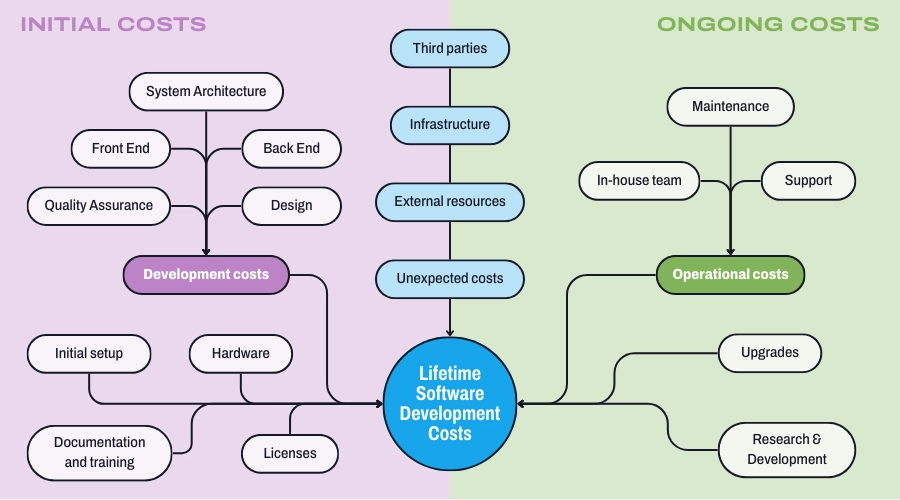
Software development is a complex and multifaceted process that goes far beyond the initial creation and deployment of an application. Understanding the lifetime cost of software development is crucial for businesses to make informed financial decisions and to ensure the sustainability and scalability of their software solutions.
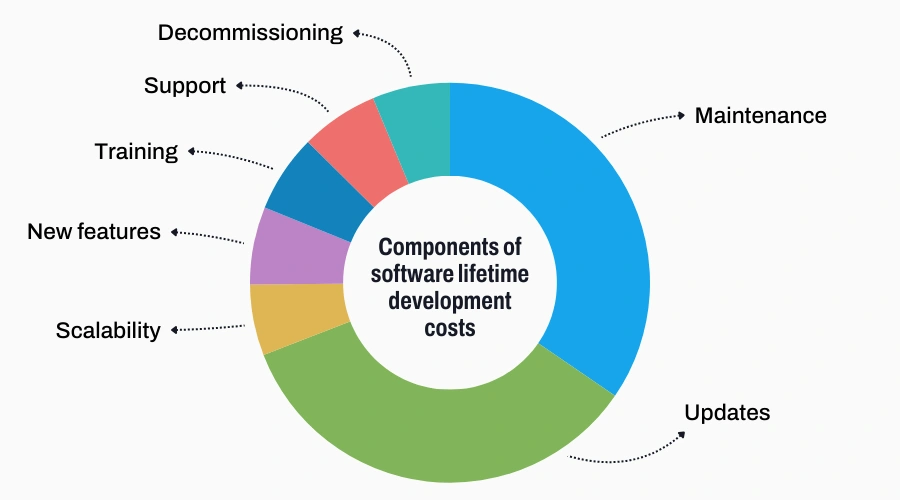
The lifetime cost of software development refers to the total cost incurred from the inception of a software project through its entire operational life. This includes not just the initial development cost but also all expenses related to maintaining, updating, and supporting the software. Here are the key components:
1. Maintenance: Regular maintenance is necessary to fix bugs, ensure compatibility with new hardware and software environments, and optimize performance. This ongoing cost can often exceed the initial development expenditure.

2. Updates: Software needs to evolve with technological advancements and user needs. Updates can range from minor patches to major overhauls, requiring significant investment in terms of time and resources.
3. Scalability: As user bases grow, software must be scaled to handle increased loads and to maintain performance. This involves both software and hardware upgrades, necessitating additional costs.
4. New features: Software often needs new features and improvements to stay competitive. This continuous development cycle contributes significantly to the overall cost.
5. Training: Training employees and users on how to effectively use the software is a crucial but often overlooked cost. This includes initial training and ongoing education as the software evolves.
6. Support: Providing user support to address issues, answer questions, and ensure smooth operation is an essential service that requires dedicated resources.
7. Decommissioning costs: Eventually, software may need to be retired and replaced. This phase involves migrating data, dismantling systems, and ensuring a smooth transition to new solutions.
Several factors can influence the lifetime cost of software development:
Certain aspects of software development often have hidden or underestimated costs that can escalate over time.

%202.png)