
%203fs.png)


When learning software development and programming languages, you are introduced to different programming paradigms, such as Procedural, Object-Oriented (OOP), Imperative, Declarative, and more. Each paradigm has a different purpose and is used to classify certain programming languages.
This article is about the Functional Programming paradigm – one of software development's most essential and extensively used programming structures.
Here is a sneak peek of what you will learn upon further reading:
Ready to take a roller coaster ride into the world of Functional Programming? Let's go!
A programming paradigm that encourages program development to be done purely with functions is called the Functional Programming paradigm (FP). In this structure, the developer writes code in pure mathematical expressions. It is designed to handle symbolic computation and application processing.
This approach treats functions as first-class citizens, meaning that functions can be:
By adopting this programming approach, you can write clean and maintainable code. It mainly focuses on "What to solve" rather than "How to solve."
The following features of Functional Programming make it a viable paradigm. Let's discuss each in detail:
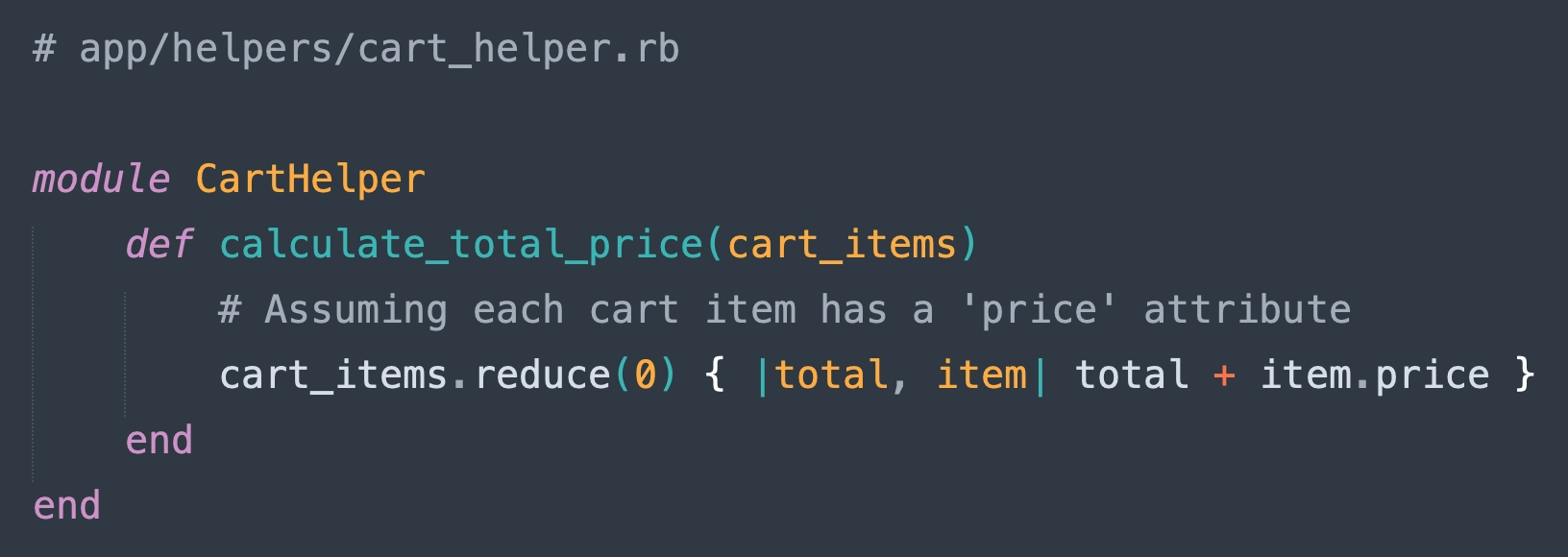
Pure functions always return the same value for the same input. They don't modify any external state or have any observable actions apart from returning a value. This behavior of providing predictable return value without causing any hidden changes to program state results in better clarity of the code and more efficient debugging and testing.
Example:
The first class functions are the ones that you can treat as a variable, i.e., you can manipulate them just like variables. You can pass them to and return from other functions. The key benefit of these functions is that there are no limitations over the usage of functions.
When a function takes a function as an argument or returns a function, it is known as a higher-order function. These functions are foundational in Functional Programming, allowing for powerful modularisation and abstraction. They allow patterns such as map, reduce, and filter, which can operate on data structures in a polymorphic manner.
All data is immutable in Functional Programming, meaning no existing value state will change. If an argument is passed to a function, the state of the argument is not changed. Instead, it returns a new value, leaving the original one unchanged.
Functional Programming adopts the declarative approach, meaning its main focus is "What" rather than "How."
Lazy evaluation means an expression is not evaluated unless its value is needed, i.e., a function that contains or requires it is not called. This approach reduces unintended side effects and makes the behavior of functions more predictable.
One of the main goals of Functional Programming is to avoid the use of flow control structures (loops, break, goto, continue, etc.). The best way to achieve this is recursion.
Recursion is when a function calls itself repeatedly unless it meets an exit condition. A developer may use this structure instead of loops to avoid complexity and increase the system's maintainability.
Example:
Although Functional Programming has existed since the 1930s, it has gained much popularity recently due to the rise of machine learning and big data.
This paradigm is a good choice when you need to analyze large data sets in a short time. Moreover, its modular structure and fast error detection also enable you to more efficiently debug your code.
Just like any other programming paradigm, Functional Programming has its perks and drawbacks.
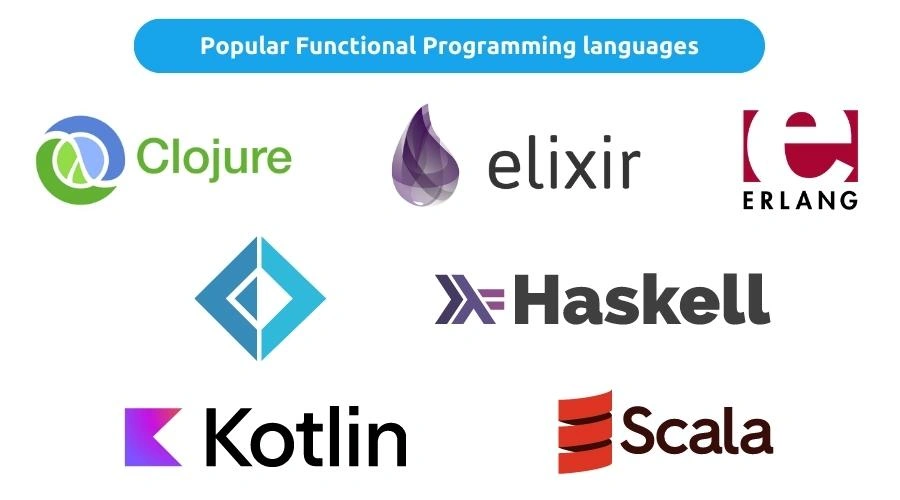
There are many signs that show Functional Programming is trending and gaining popularity among software developers. Here's a short list of popular FP languages that you can learn to excel in the field:
The Functional Programming paradigm is an excellent approach to achieving maintainable, testable, and sustainable programs.
However, FP also has its drawbacks, such as potentially higher memory consumption, complex state management, and a steep learning curve.
In this article, we have discussed Functional Programming, its features, pros and cons, and uses. We have also suggested a few Functional Programming languages you can learn to excel in your software development career.
We hope you've learned something new. See you on the next one!

%202.png)